
Additive Manufacturing: Quality Control and Material Validation

Additive Manufacturing (3D Printing) represents one of the most significant innovations in the modern manufacturing landscape. However, the quality and reliability of printed components depend critically on the characteristics of the metal or polymer powders used, on process parameters, and on the rigorous quality control of the finished part.
AMA L.L.C. Middle East in Dubai supports companies and research centers in the United Arab Emirates (UAE) operating in metal and polymer 3D printing, offering a comprehensive suite of chemical, physical, and metallographic analyses. Leveraging the advanced diagnostic capabilities of our APM laboratory in Italy, we ensure that both raw materials (powders) and additively manufactured parts meet the highest industry standards of performance and safety.
Powder Analysis for Additive Manufacturing
The consistency and quality of the starting material are the essential pillars for ensuring reliable and repeatable 3D-printed components. Our laboratories carry out all the checks required for the qualification, validation, and ongoing monitoring of metal and polymer powders.
By coordinating local support through AMA L.L.C. Middle East in Dubai with the advanced analytical depth of our APM facility in Italy, we provide a comprehensive diagnostic framework to certify that your raw materials meet the highest standards of industrial performance.
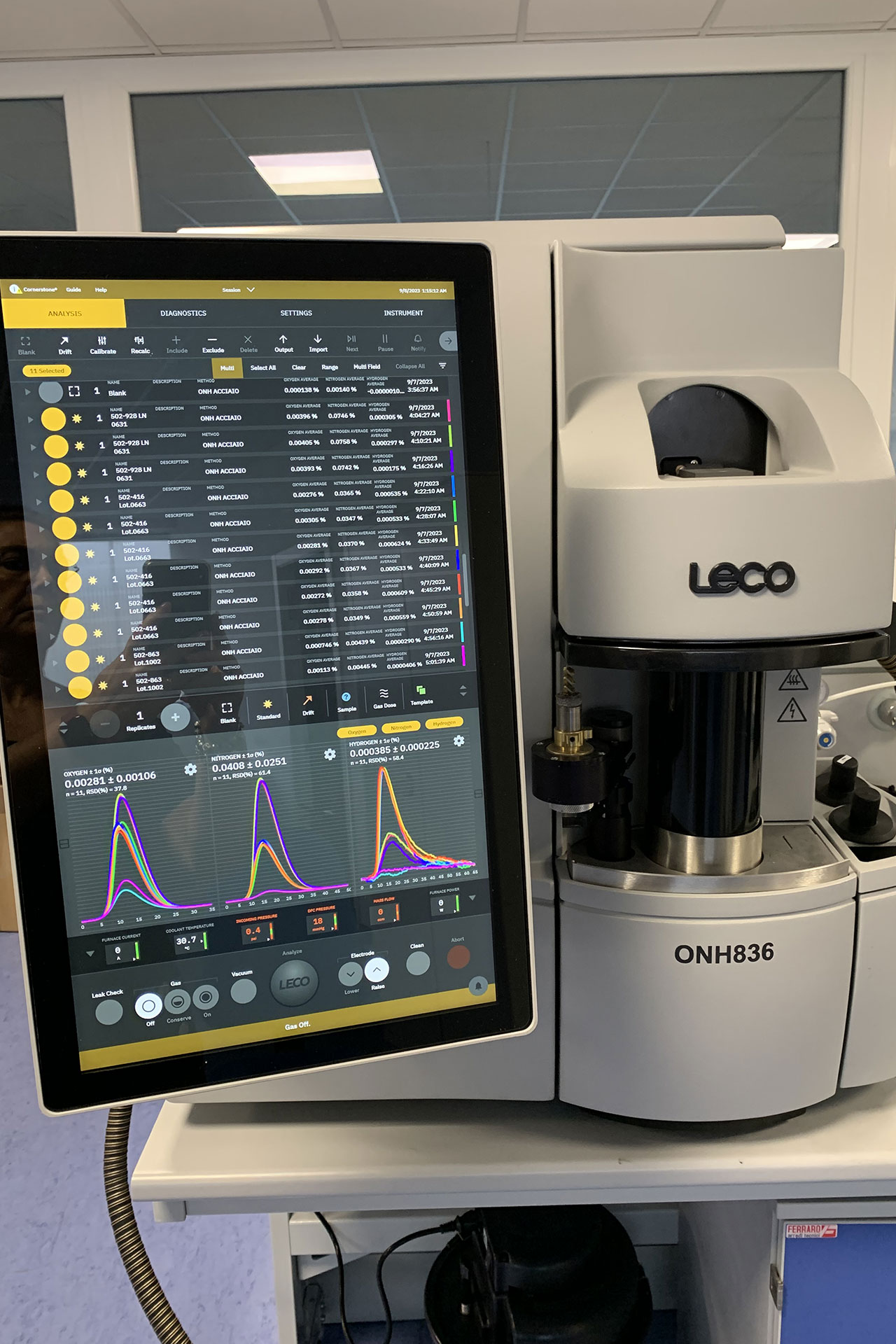
Elemental Chemical Analysis
- Determination of Carbon, Sulfur, Oxygen, Nitrogen, and Hydrogen using infrared and thermal conductivity analyzers. Carried out in accordance with ASTM 1019, ASTM E1447, ASTM E1409-13, and ISO 13093, this analysis is vital for detecting oxidation or contamination that can cause structural embrittlement.
- Using ICP-OES spectrometry in accordance with ASTM E1479 and ASTM E2371, it is possible to verify the exact concentration of alloying elements. This ensures the powder's chemical profile remains consistent, guaranteeing repeatable mechanical properties and metallurgical stability.
Particle Size Distribution (Sieve Analysis)
Measurement of particle size distribution using calibrated mechanical sieves in accordance with ASTM B214-22. This method identifies the percentage of particles in each size fraction, enabling the detection of variations between batches or signs of powder degradation.
Hall Flow and Apparent Density
Assessment of powder flowability and packing density in accordance with ASTM B212-21 and ASTM B329-24. Understanding these parameters is essential for ensuring uniform layer deposition during 3D printing and preventing internal porosity.
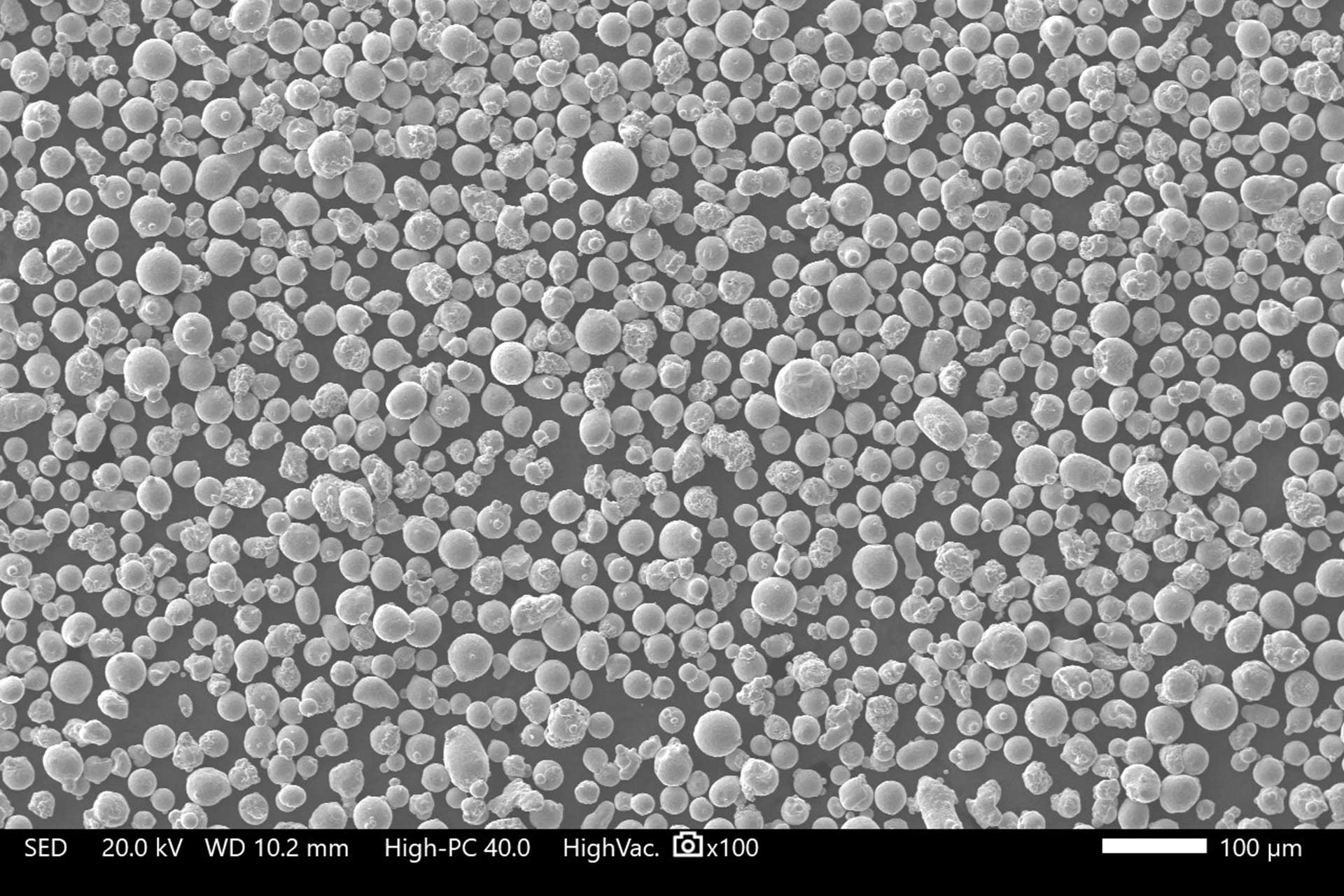
Morphological Analysis and Particle Verification via SEM
Using scanning electron microscopy (SEM), it is possible to characterize particle shape, sphericity, and the presence of satellites, oxides, or contaminants. High-resolution imaging provides an in-depth understanding of powder quality before it enters the production line.
These analyses make it possible to monitor material stability, identify contamination, and ensure the proper quality of the powder before its use in additive manufacturing processes.
Request a Quote for Additive Manufacturing Analysis
If you are looking for a laboratory experienced in fracture analysis, corrosion testing, or the study of galvanic coatings for 3D-printed components, AMA L.L.C. Middle East in Dubai is the ideal choice. We are ready to provide you with specialized technical support and detailed analysis compliant with the leading international standards. By combining our local presence in the UAE with the analytical depth of our APM laboratory in Italy, we help you validate your additive processes and ensure the reliability of your components. Request a personalized quote today.


Testing on Printed Components
In addition to powder characterization, our hub, AMA L.L.C. Middle East in Dubai, in collaboration with our APM laboratory in Italy, performs mechanical and metallographic testing on components manufactured using additive technologies:
Tensile testing on specimens or sections taken from the printed component. Verification of yield strength, tensile strength, and elongation, accounting for process anisotropy.
Sample preparation for metallographic analysis, optical microscopy, and SEM to assess grain structure, porosity levels, and internal defects, as well as verify interlayer adhesion.
Hardness testing (Vickers/Rockwell) to evaluate the effectiveness of post-processing heat treatments (stress relieving, HIP). Assessment of surface hardening and metallurgical stability.
These tests make it possible to validate the printing process, compare materials and production parameters, and ensure compliance with required technical specifications.
Sectors and Applications
Our advanced analytical services for Additive Manufacturing are designed for:
- Manufacturers of metal or polymer components produced via 3D printing;
- Suppliers and producers of powders for additive manufacturing;
- Research and development centers focused on materials innovation;
- Aerospace, Medical, Automotive, Energy, and Precision Mechanics sectors.
The AMA L.L.C. Middle East Value in Dubai
- Access to international certifications through our headquarters in Italy, ACCREDIA accredited No. 01224 for chemical and mechanical testing.
- State-of-the-art technology at our center in Italy for SEM microscopy, elemental analysis, and advanced powder characterization.
- Complete control across the entire supply chain: from raw material (powder) validation to verification of the final printed component.
- Detailed analytical reports and remote technical support provided by experts for results interpretation and process validation.
- Verification of materials and components in accordance with international standards (ASTM, ISO, DIN), essential for the high-quality requirements of Middle Eastern industrial sectors.