
Analysis of Rubber, Plastics and Synthetic Fibers

The analysis of polymeric materials requires the use of sophisticated, complementary techniques to ensure comprehensive and reliable characterization. The APM laboratory in Italy, supported by our AMA L.L.C. Middle East office, relies on a fundamental “analytical trio” — Fourier Transform Infrared Spectroscopy (FTIR), Differential Scanning Calorimetry (DSC), and Thermogravimetric Analysis (TGA) — for the in-depth study of rubber, plastics, and fibers.
Through our technical hub, AMA L.L.C. Middle East in Dubai, we coordinate specialized testing programs carried out at our advanced laboratory in Italy. These methodologies are used individually or in combination to provide a detailed picture of a material’s chemical composition, physical properties, and thermal behavior. This integrated approach delivers an excellent polymer testing service in Dubai, serving the industrial, biomedical, automotive, and electronics sectors across the UAE. Whether for quality control, material identification, or reverse engineering, our facility in Italy ensures that every polymer analysis meets the highest international standards of precision.
Analysis of Rubber, Plastics and Fibers: Mass Spectrometry for Organic Analysis
To achieve a truly multidimensional characterization of polymeric materials, APM integrates thermal and spectroscopic data with advanced Mass Spectrometry (GC-MS / HPLC-MS). While FTIR, DSC, and TGA define the material’s fingerprint and thermal stability, Mass Spectrometry allows us to identify and quantify organic substances, additives, and degradation products with extreme precision.
Managed through our AMA L.L.C. Middle East office in Dubai and carried out at our laboratory in Italy, this process involves solvent extraction of the analytes, followed by chromatographic separation and identification using extensive spectral libraries. This technique is indispensable for the industrial and biomedical sectors in the UAE for detecting:
- Additives and Plasticizers: To ensure chemical compliance and performance.
- Flame Retardants: To verify safety requirements in construction and automotive applications.
- Degradation Products: To investigate the failure or aging of rubbers and plastics.


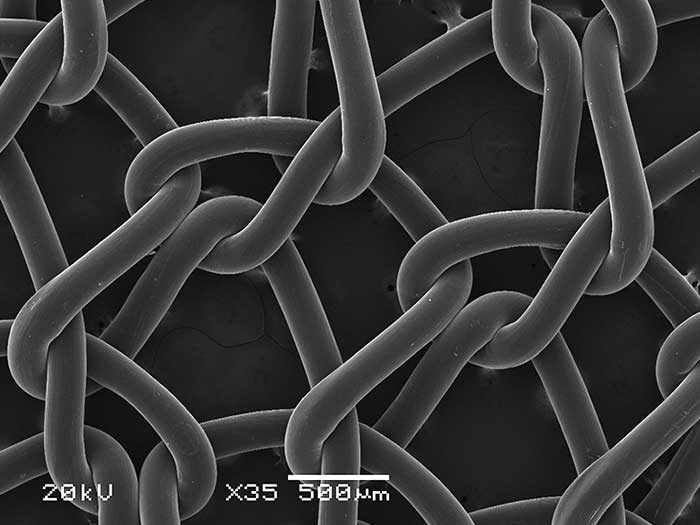
This integrated analytical suite provides a true “DNA profile” of your materials, supporting process optimization and ensuring your products meet the most rigorous international quality standards.
QUALITY ASSURANCE AND REGULATORY COMPLIANCE
Precision and reliability are the cornerstones of our analytical services. All testing programs managed by AMA L.L.C. Middle East in Dubai strictly comply with national and international standards, including UNI, EN, ISO, ASTM, and DIN, as well as specific client-defined protocols. This commitment ensures that our results are not only accurate and repeatable, but also fully certifiable for industrial and research applications throughout the United Arab Emirates.
Through the combination of state-of-the-art technology and rigorous compliance, AMA L.L.C. Middle East in Dubai — connected to APM and its laboratories in Italy — positions itself as a partner of excellence for the advanced characterization of polymeric materials. From our consulting services in Dubai to the high-tech laboratory in Italy, we offer a comprehensive, tailored service designed to meet the unique needs of the Middle Eastern market, giving our clients the assurance of quality.



FTIR SPECTROSCOPY: ADVANCED CHEMICAL IDENTIFICATION
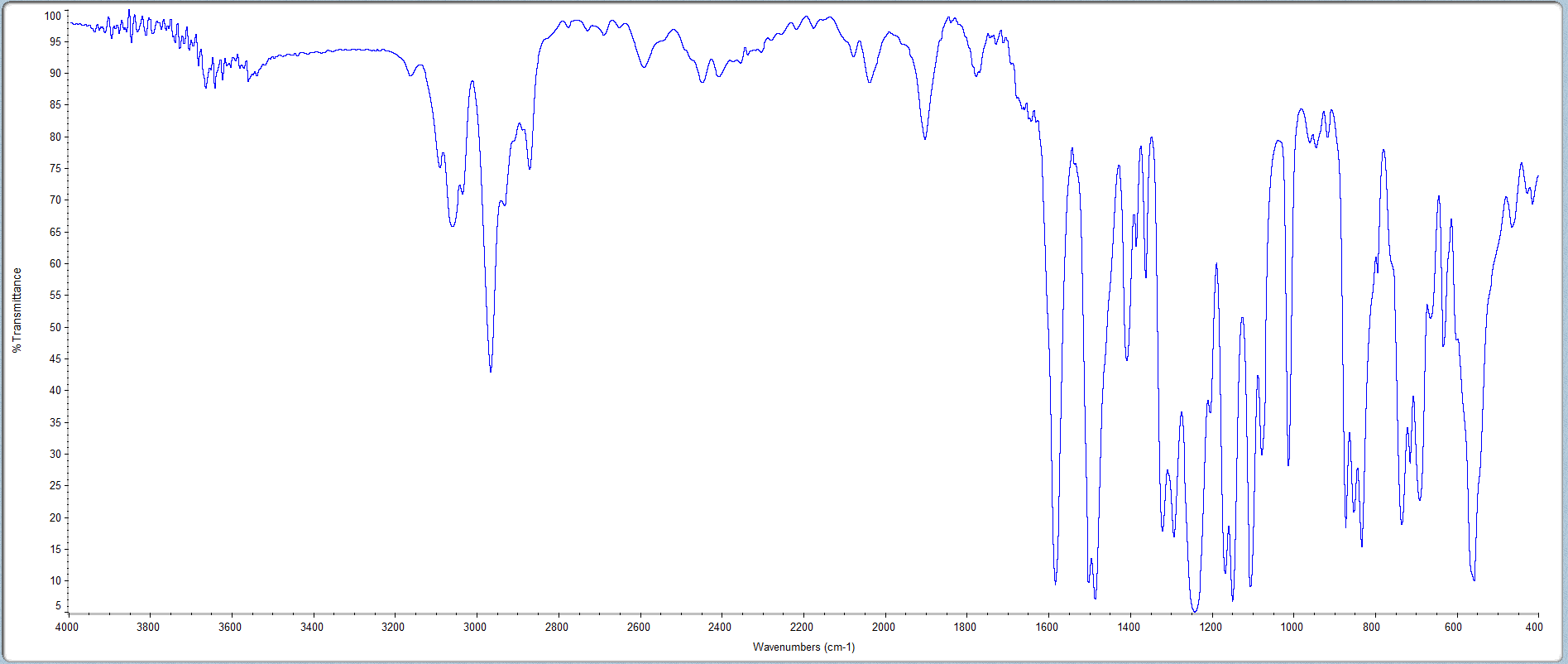
FTIR spectroscopy is an indispensable tool for identifying the type of polymer and the functional groups present in a sample. By leveraging the interaction between infrared radiation and molecular bonds, this technique produces a true chemical “fingerprint” of the material.
At APM’s laboratories in Italy, FTIR technology is enhanced by an advanced IR microscope, enabling the analysis of extremely small samples, down to just a few tens of microns. While our AMA L.L.C. Middle East office in Dubai manages technical consulting, the physical analysis is carried out at our laboratory in Italy, which specializes in characterizing micro-residues, scraps, or trace contaminants. This precision is vital for the industrial and biomedical sectors in the UAE, providing definitive answers even for non-homogeneous materials or microscopic failures.
DSC CALORIMETRY: STUDY OF THERMAL PROPERTIES
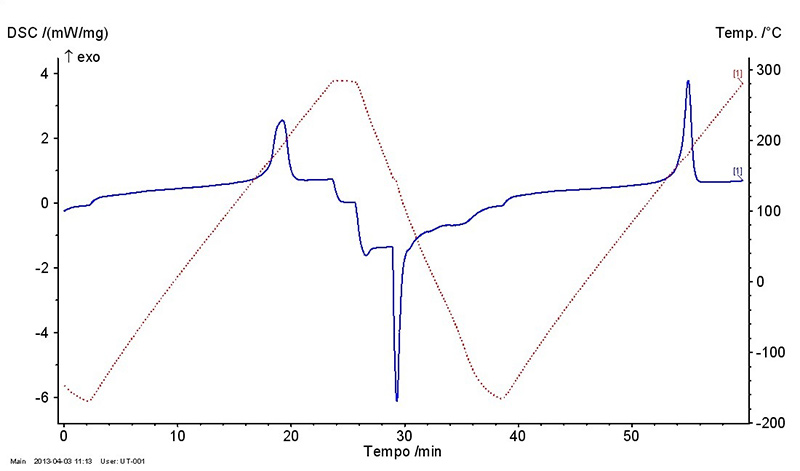
Differential Scanning Calorimetry (DSC) is essential for mapping the thermal transitions of polymeric materials, such as melting temperature (Tm) and glass transition temperature (Tg). By measuring heat flow as a function of temperature, this technique provides deep insight into the physical characteristics and overall quality of the polymer.
Our APM laboratory in Italy uses advanced instrumentation capable of analyzing extremely low temperatures, down to –150°C, enabling detailed studies of polymers that require specific thermal conditions. DSC analysis is also a powerful diagnostic tool: the calorimetric trace can reveal the presence of foreign materials, blends with recycled content, molding defects, or residual stresses. Our consulting service with AMA L.L.C. Middle East in Dubai translates these complex thermal maps into clear quality assessments for the UAE’s industrial and manufacturing sectors.
TGA Thermogravimetric Analysis: Thermal Stability Assessment – Dubai
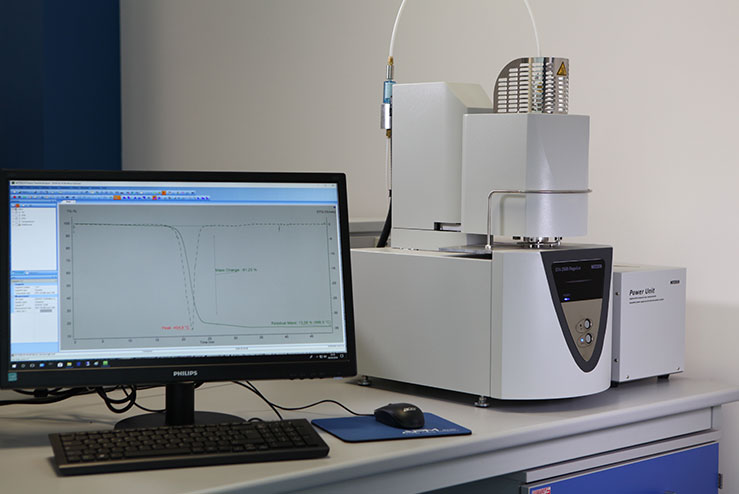
Thermogravimetric Analysis (TGA) completes the thermal analysis picture by measuring the change in a sample’s mass as a function of temperature. This method is essential for assessing thermal stability and chemical composition, providing a precise quantitative breakdown of the material. By analyzing weight loss during controlled heating at our APM laboratory in Italy, it is possible to determine the exact concentration of volatile components, plasticizers, and solvent residues. TGA is also the “gold standard” for quantifying mineral fillers, carbon black, and ash residue. These insights are crucial for Dubai’s industrial sector in verifying material purity, ensuring compliance with technical specifications, and assessing polymer behavior under high-temperature operating conditions.




Request a Personalized Quote
If you require high-level expertise in FTIR spectroscopy, DSC calorimetry, or TGA thermogravimetric analysis, AMA L.L.C. Middle East is your strategic partner in the United Arab Emirates. We offer comprehensive analytical services for polymers, rubbers, and plastics, ensuring results that are not only precise but fully compliant with international regulatory frameworks. While laboratory operations are centralized at our advanced facility in Italy to ensure European quality standards, our AMA L.L.C. Middle East office in Dubai ensures fast, seamless communication. We are structured to handle urgent requests through an accelerated logistics protocol, minimizing turnaround times without compromising analytical rigor. Contact us today for personalized consulting and discover how our certified data can optimize your production processes and material quality in the UAE market.
ADVANCED TECHNIQUES FOR THE CHARACTERIZATION AND ANALYSIS OF RUBBER, PLASTICS AND FIBERS – POLYMER TESTING LABORATORY DUBAI
The APM laboratory in Italy, together with the AMA L.L.C. Middle East office in Dubai, offers a wide range of advanced techniques for the analysis and characterization of rubber, plastics, and fibers. To meet the needs of the industrial landscape in the United Arab Emirates and the Middle East, we combine qualified technical consulting at our AMA L.L.C. Middle East office in Dubai with specialized testing carried out at our laboratory of excellence in Italy.
Below is a detailed overview of the testing services available to companies and industries in the UAE and the Middle East, designed to ensure material performance, regulatory compliance, and manufacturing excellence:
Fluid Resistance Testing
This test assesses the ability of polymeric materials to maintain their structural and chemical integrity when in contact with aggressive fluids. It is a critical verification for components in Dubai's automotive, aerospace, and oil & gas sectors, where resistance to oils, fuels, and chemical agents is essential for safety and long-term durability.
Base Polymer Characterization via FTIR Infrared Spectroscopy
Through Fourier Transform Infrared spectroscopy, we identify functional groups to define the material's chemical fingerprint. This analysis is essential for the rapid identification of unknown polymers, verifying the consistency of raw material batches, and detecting macro-contamination.
Characterization of Residues and Scraps via FTIR Infrared Microscopy
Our APM laboratory in Italy is equipped with advanced IR micro-spectroscopy, enabling the chemical characterization of extremely small samples, such as micro-residues, scraps, or fragments down to just a few tens of microns. This technique is indispensable for resolving manufacturing defects and identifying localized contaminants in non-homogeneous materials.
DSC Thermal Analysis with Melting Point and Glass Transition Measurement down to -160°C
Differential Scanning Calorimetry (DSC) measures fundamental thermal transitions such as melting point and glass transition temperature. Our instrumentation enables testing at extreme temperatures down to -150°C, providing crucial data for materials intended for critical environments, including cryogenic applications or high-performance industrial components.
Thermogravimetric Analysis (TGA)
TGA monitors the change in a sample's weight during heating, providing a quantitative map of its composition. It is the primary method for determining thermal stability, the presence of volatile components, and the exact percentage of inorganic fillers, carbon black, or plasticizers in a polymer matrix.
Shore A Hardness Measurement
Hardness is a key mechanical indicator for elastomers and soft plastics. This test measures the material's resistance to penetration using standardized instruments. It ensures that the final product meets specific stiffness requirements and maintains consistent performance in accordance with international industrial standards.
Determination of Filler Type and Content
By combining scanning electron microscopy (SEM) with EDS spectroscopy, we analyze the morphology and chemical nature of inorganic fillers. This level of analysis is vital for understanding how additives influence the mechanical and thermal properties of the material, revealing details that are often invisible to traditional testing.
Plasticizer Analysis
Using techniques such as FTIR, GC-MS, or HPLC-MS, we verify the type and quantity of plasticizers added to polymers to increase their flexibility. This analysis ensures that the material complies with performance requirements and stringent international safety and environmental regulations.
Residual Solvent Analysis
This test identifies and quantifies any solvents that may remain trapped in the material after manufacturing or coating processes. Monitoring residual solvents is essential for preventing long-term degradation, ensuring chemical safety, and maintaining the aesthetic and structural quality of the final product.
Moisture Content Determination via Karl Fischer Titration
Moisture content can heavily influence the processing and properties of many polymers. The Karl Fischer titration method provides an ultra-precise measurement of water content, far exceeding the accuracy of simple drying tests, and is essential for high-performance polymers and sensitive manufacturing applications.
Flame Retardant Analysis in Accordance with RoHS Regulations
We perform specialized screening to detect restricted flame retardants (such as PBB and PBDE) in compliance with the RoHS directive. This service is vital for companies in the electronics and construction sectors to ensure that products meet global safety and environmental standards.
Gas Chromatographic Analysis of Airborne Samples Captured on Adsorbent Substrates
Using gas chromatography, it is possible to analyze volatile organic compounds (VOCs) captured on specific adsorbent substrates. This service provides a detailed map of substances released by materials, essential for air quality assessment, emission testing, and evaluating the environmental impact of industrial polymers.
Analysis via Gas Chromatography-Mass Spectrometry
Gas chromatography coupled with mass spectrometry represents the "gold standard" for identifying and quantifying complex organic mixtures, including oils, hydrocarbons, and specialized additives. The high separation power of the chromatographic column ensures maximum detail in identifying even trace-level components.
Degradation Products Analysis
This analysis studies the chemical species generated when elastomers, plastics, and rubbers are subjected to controlled thermal stress. Understanding these degradation products is essential for predicting material lifespan, aging resistance, and behavior in high-temperature industrial environments.
Analysis via High-Performance Liquid Chromatography (HPLC-MS)
High-performance liquid chromatography coupled with mass spectrometry (HPLC-MS) is used to identify and quantify thermolabile or high-molecular-weight additives, such as UV stabilizers and antioxidants. This technique is indispensable for advanced reverse engineering and the verification of complex formulations.