
Metal Alloy Chemical Analysis

The chemical analysis of metal alloys is a fundamental aspect of ensuring the quality, composition, and performance of materials in strategic sectors such as metallurgy, mechanical component manufacturing, automotive, and aerospace.
Through our technical hub, AMA L.L.C. Middle East in Dubai, the APM laboratory in Italy offers advanced characterization services and precision chemical analysis for industries in the United Arab Emirates (UAE) and the Middle East. Leveraging the sophisticated instrumentation of our laboratory in Italy, we ensure full compliance with the most rigorous international standards, providing certifiable data essential for verifying raw materials and ensuring manufacturing excellence.
Metal and Metal Alloy Analysis
The chemical analysis of metal alloys is essential for determining the exact elemental composition, alloying element content, and presence of trace impurities. These factors directly determine the material’s physical and mechanical properties. Through our technical hub, AMA L.L.C. Middle East in Dubai, we assess alloys at the APM laboratory in Italy in accordance with international standards (UNI, EN, ISO, ASTM, DIN) or client-specific requirements.
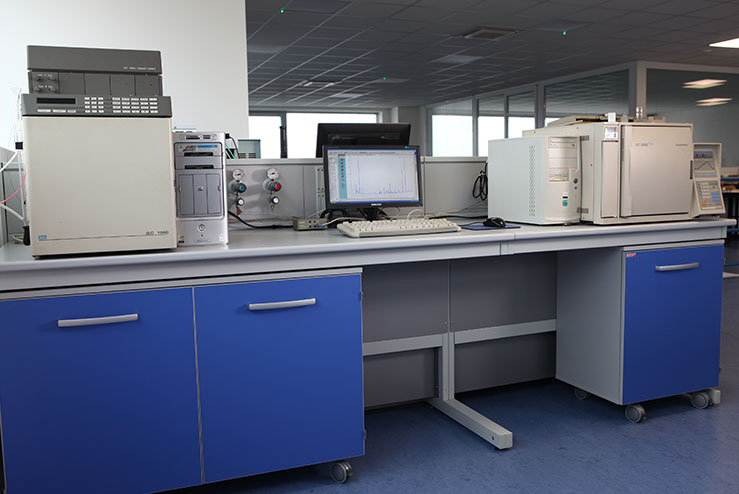
To ensure the highest level of accuracy, we employ a sophisticated suite of analytical techniques carried out at our laboratory in Italy:
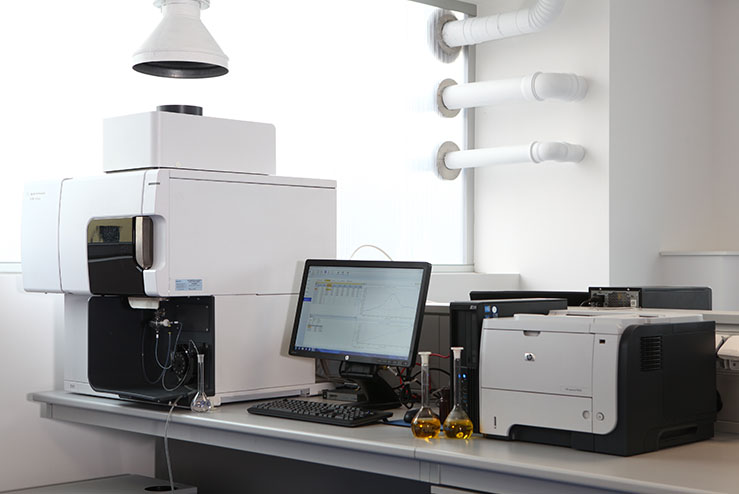
- ICP-OES (Inductively Coupled Plasma Optical Emission Spectrometry): Ideal for the simultaneous determination of major and minor elements with high precision.
- ICP-MS (Inductively Coupled Plasma Mass Spectrometry): The “gold standard” for detecting ultra-trace elements and impurities down to parts-per-billion (ppb) levels.
These advanced methods provide the detailed data companies in the UAE need to optimize production processes, monitor material quality, and ensure absolute compliance with global regulatory frameworks.

Features and Benefits of ICP-OES
High Sensitivity
Enables the detection of trace elements at concentrations down to 0.5 ppm. This level of precision is ideal for detailed characterization and identifying minor chemical variations in high-performance alloys.
Multi-element Analysis
The ICP-OES system can simultaneously determine the concentration of dozens of elements in a single run. This capability significantly reduces analysis time while providing a complete elemental profile.
versatility
An extremely flexible technique applicable to numerous matrices, including metals, complex alloys, industrial process waters, soils, and specialized chemical solutions used across UAE industries.
Speed and accuracy
Delivers rapid results without compromising precision. Every analysis is supported by calibrations against certified reference materials (CRMs), ensuring data accuracy and full compliance with international protocols.
Metal Alloy Analysis and Advanced Technologies Used: ICP-OES and ICP-MS
To meet the demanding quality standards of the UAE industrial sector, AMA L.L.C. Middle East employs a combination of ICP-OES and ICP-MS technologies, which represent the pinnacle of modern elemental analysis.
ICP-OES (Inductively Coupled Plasma Optical Emission Spectrometry) is a cutting-edge technique for the quantitative and qualitative determination of chemical elements across a wide range of matrices. This technology is valued for its precision and sensitivity, making it the ideal solution for metallurgical companies in the United Arab Emirates and the Middle East that require a complete and rapid chemical profile of their materials. For even more stringent requirements, our ICP-MS (Inductively Coupled Plasma Mass Spectrometry) analyses enable the detection of ultra-trace elements, ensuring that even the smallest impurity does not compromise your high-performance alloys.
.
How ICP Spectrometry Works
-
- Sample Preparation: The solid material is precisely dissolved in a known volume of solution through targeted acid digestion or specific acid mixtures. This step ensures the sample is fully representative and ready for atomization.
- Nebulization and Ionization: The solution is nebulized into an extremely high-temperature argon plasma torch (up to 10,000°C), generated by radio frequencies. This ultra-high-energy environment ionizes the atoms, preparing them for detection.
- Analysis and Quantification: The light emitted by the elements (in OES) or their mass-to-charge ratio (in MS) is analyzed to determine the sample’s chemical composition. This enables the simultaneous quantification of multiple elements with exceptional sensitivity and accuracy.

Request a Quote for Metal Alloy Analysis in Dubai
If you are looking for a laboratory specializing in the chemical analysis of metal alloys, AMA L.L.C. Middle East is the ideal choice. We offer analytical solutions compliant with international standards and tailored to your company’s needs. Request a quote today!
Specific Chemical Analysis of Metal Alloys
Plasma emission spectrometry (ICP-OES) can be applied to a wide variety of metals and alloys, thanks to its exceptional versatility and sensitivity. This technique allows for the analysis of both common metals, such as carbon steels, stainless steels, and cast irons, as well as more specific metals, including aluminum, copper, zinc, nickel, titanium, cobalt alloys, and hard metal (cemented carbides).
Through the strategic coordination of our technical hub, AMA L.L.C. Middle East in Dubai, and the analytical excellence of our APM laboratory in Italy, this technology is ideal for determining elements present in trace amounts or higher concentrations. We guarantee reliable, detailed, and certifiable results for industrial applications, environmental assessments, and advanced materials research throughout the United Arab Emirates and the Middle East.
Below is a detailed overview of the specific metal matrices we analyze:
- Carbon and alloy steels: Composition determination of steels to optimize mechanical characteristics and corrosion resistance.
- Stainless and high-alloy steels: Analysis to determine chromium, nickel, and molybdenum content, which influence corrosion resistance properties.
- Aluminum alloys: Analysis to determine magnesium, silicon, and other alloying element content that confer lightweight and strength properties.
- Copper and brass alloys: Analysis to control copper and zinc composition, essential for ensuring durability and electrical conductivity.
- Cast iron: Determination of cast iron’s main components, such as carbon and silicon, to control castability and strength properties.
- Titanium and nickel alloys: Analysis to determine the presence of elements that enhance high-temperature and corrosion resistance characteristics.
- Hard metal: Analysis of carbide alloys to assess hardness and wear resistance.
- Cobalt alloys: Analysis of alloys primarily used in extreme environment applications, crucial for ensuring compliance with strength and hardness standards.
Chemical Analysis Services for Metal Alloys
Leveraging advanced technical expertise and state-of-the-art instrumentation, our APM laboratory in Italy provides in-depth analysis services, coordinated by our AMA L.L.C. Middle East hub in Dubai and carried out at our laboratory in Italy.
Carbon and Sulfur Determination
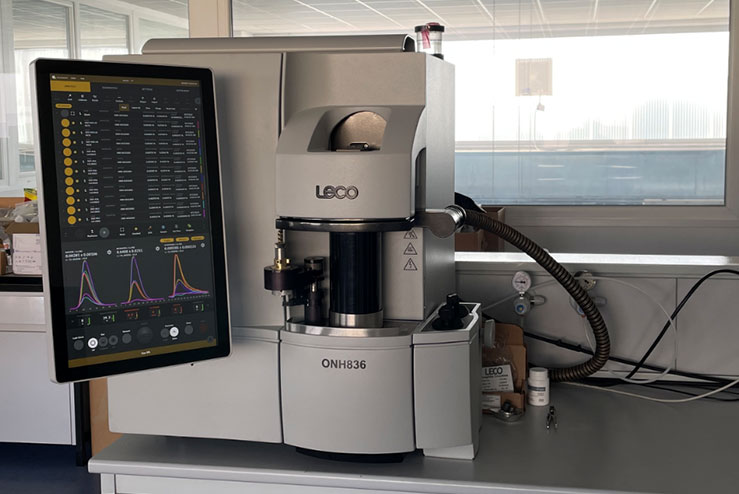
Using specific combustion analyzers, we measure carbon and sulfur content with extreme precision — critical elements that directly influence the mechanical properties and chemical stability of alloys.
Hydrogen, Oxygen, Nitrogen Analysis
Even minimal traces of these gases can compromise alloy quality, causing hydrogen embrittlement or porosity. Our accurate analysis monitors these parameters to ensure materials meet the most rigorous international standards.
Analysis of Diverse Metal Matrices
We offer detailed characterization for a wide range of materials, including carbon steels, stainless steels, cast irons, hard metal, and aluminum, copper, zinc, cobalt, nickel, and titanium alloys.
Control of Welding and Brazing Alloys
We ensure the reliability and quality of alloys used in joining processes by examining chemical composition and expected mechanical performance to prevent failure of welded joints.
Analysis of Solid and Aqueous Samples
In addition to metals, we perform chemical analysis on soils, rocks, industrial effluents, and galvanic baths, ensuring a comprehensive assessment of both aqueous and non-aqueous matrices.
Water Analysis
- Drinking water: Testing of water intended for human consumption in accordance with current safety regulations.
- Wastewater: Monitoring of process effluents and wastewater to ensure full environmental compliance.